
INNOVATIVE SENSOR TECHNOLOGY
UFB’s interdisciplinary sensor programme drew on engineering experience from automotive and aerospace development to address the physical challenges of maritime operating conditions. UFB developed sensor-fusion and system-architecture concepts for maritime perception and autonomy together with specialised technology and research partners.
The development focused on reliable perception under vessel motion, changing weather, glare, reflections, fog and rain. This work established a practical basis for examining safe onboard perception and decision-making under real maritime conditions.
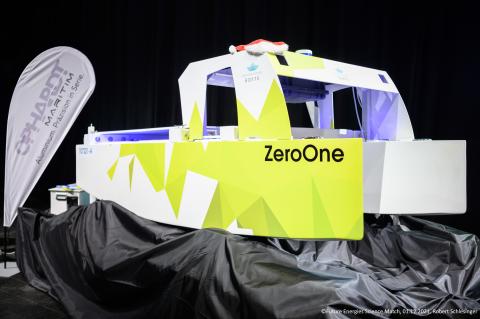
ZeroOne served as a flexible technology carrier for multiple sensor configurations and rapid integration cycles. Its operation on the water generated real-world observations and data for maritime perception, sensor-fusion and onboard-system development.
MAIN ACHIEVEMENTS OF THE PAST 5 YEARS
- We built our own prototypes (boats, sensors & systems)
- Worked with the 42-kilometre Digital Test Field on the Schlei as a real-world development environment
- Participated in German, regional and European innovation programmes
- Developed proprietary sensor concepts for maritime perception
- was able to win strong cooperation partners
- Developed industrialisation concepts with manufacturing partners
- Developed proprietary technology and know-how through the programme
- Developed concepts for digital communication between vessels and infrastructure
- Used real-world test environments for R&D and validation
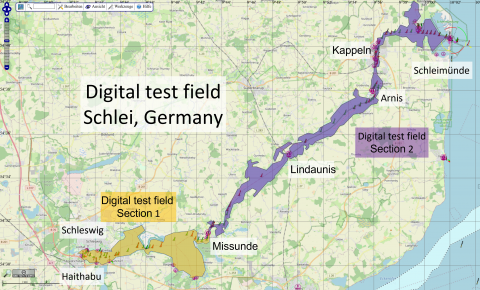
ZeroOne served as UFB’s registered autonomous technology demonstrator and could operate without a permanent remote connection. The platform enabled real-world testing of maritime perception, sensor fusion and onboard decision-making. The results informed subsequent FutureOne and CargoOne development concepts.
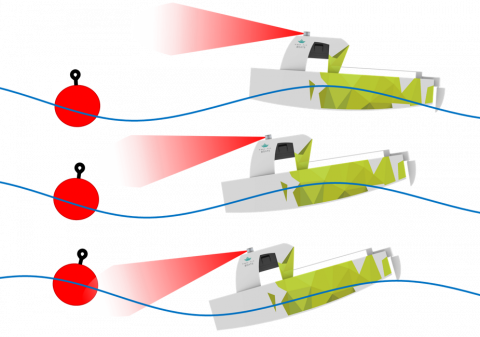
UFB’s sensor-fusion work addressed the differences between road and maritime autonomy, including permanent vessel motion, moving reference frames, glare, reflections, fog and rain. The programme contributed to UFB’s broader development of autonomous maritime operation under real-world conditions.
UFB also contributed practical experience through project-advisory activities in applied research, including work involving Fraunhofer. Within the wider Digital Test Field ecosystem, research partners examined complementary infrastructure questions such as autonomous navigation through locks. These contributions expanded a shared knowledge base and are not presented as UFB-only results.
